
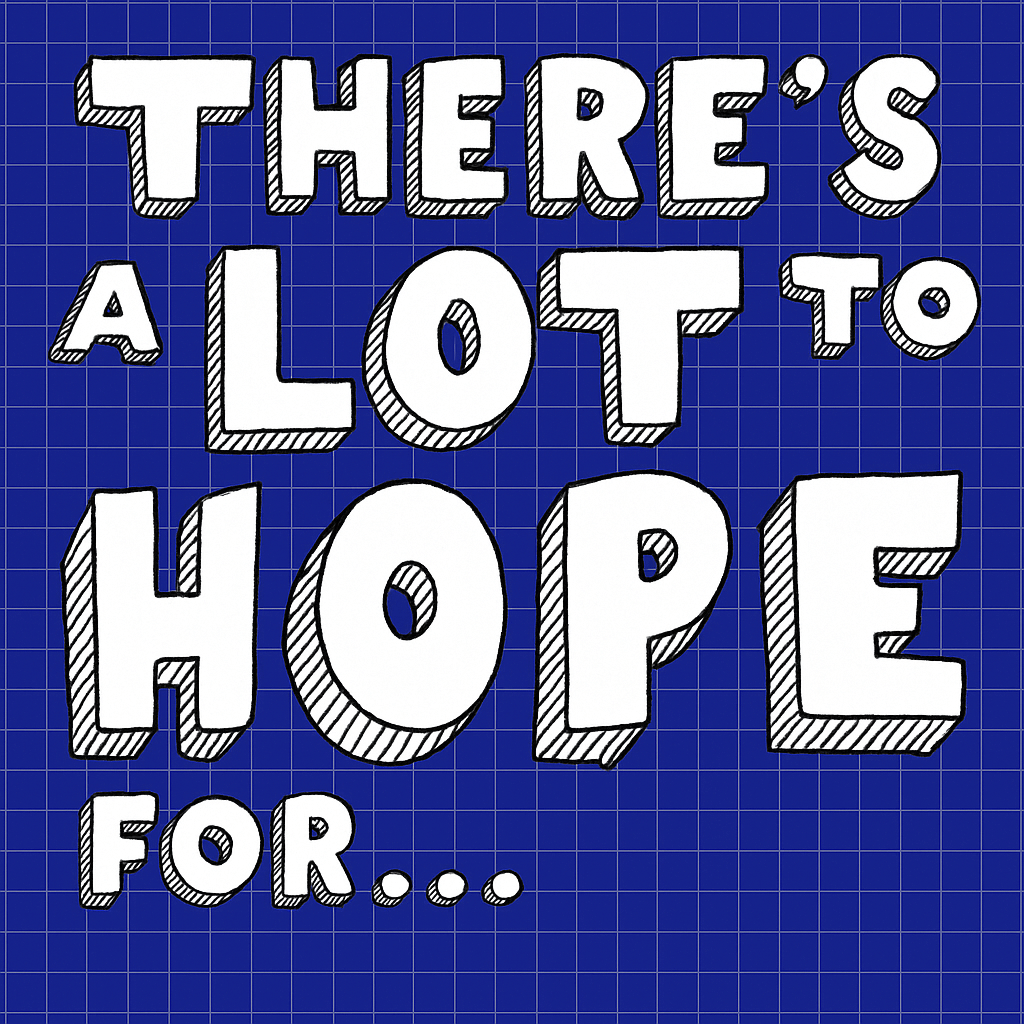
There’s a Lot to Hope For (Soundtrack)
00:00/00:00
- Witness Service
What if we completely reshaped our idea of "service"?
This song asks what justice could look like if power meant truly listening. It imagines a world where those in authority bear witness to lived experience, where service means humility, and where the act of listening itself becomes a form of repair.
- Hush Little Baby
“It must be very difficult to be an ex-prisoner and deal with everything on your own until you can get help”
Hush Little Baby is a reflection on the struggles of parenthood during and after prison. The song speaks to the isolation and courage of rebuilding family life while navigating stigma and resettlement after a period apart.
- Black Rose
"If I could make any change, of course, it just wouldn't happen. No families would be hurt. All we can hope for is that people get the best kind of support"
Black Rose reflects on grief, loss, and the hope for better systems of support. It carries the voice of someone who wishes things could have been different, that harm could have been prevented, and that compassion might have arrived in time. - White Flag
Sometimes it feels like even when you’re trying to build trust, someone’s ready to knock it down. You’re expected to surrender, to wave a flag before you’ve even had a chance to speak. It’s a quiet frustration that sits beneath the surface of so many lives, where peace feels possible but rarely offered.
White Flag is a song about trust, identity, and the fragile ground between conflict and reconciliation. It challenges how society sees difference, exploring the courage it takes to seek understanding in a world that too often meets vulnerability with suspicion.
- Motivator
"We need to think about approaches and if they need to be individual. How do you speak to people and find out how they best want communicated with, and in a way that isn’t filled with power and intimidation?”
Motivator questions how systems communicate and who they serve in the process. It suggests that real change can happen with finding ways to talk, listen, and work together that don’t rely on intimidation or hierarchy, but on mutual respect.
- Liberation
"Folk would have a better chance of staying clean and out of jail if they weren’t humiliated and were provided more opportunities to participate in society."
Liberation is a reflection on release, renewal, and the delicate balance between freedom and survival. It calls for dignity and opportunity rather than humiliation and exclusion, reminding us that hope grows when people are invited to participate in society again.
Notes on the symbolism in the video: The clear plastic bag is how many people are handed their personal belongings on leaving prison. This could include clothes, letters, legal docs, anything. Some of the items may not have been in their possession for a significant period of time. The GS5 officers represent the private industries that profit from the prison industry. The beetle costume came from a long conversation about unwanted creatures people try to remove from their environment
- Liberation Kit When people get out of prison, they get sent from one place to another - a form here, a number there, a voucher (if you’re lucky!). You end up with bits and pieces but not what you really need. We started asking people who’ve been through it, ‘What would’ve helped you start again?’ That’s where the list came from - real conversations, real experiences. People laughed about it at first, but everyone knew what they’d put in theirs: a clean set of clothes, something nice to cook, safety, a reason to smile.
- Hope It’s easy to make plans - what’s hard is keeping hold of them when everything starts to fall apart. Sometimes hope isn’t about fixing things, it’s just about not giving up on each other. Wanting to swim together instead of drift further apart.
- Deny, Delay, Death
Deny, Delay, Death is about the moments you try to get help for someone you love, but it’s like shouting into a void. There’s always another form, another phone call, another reason why nothing can be done. People get worn down by it - you can see it happening. All that red tape, all those rules, and in the middle of it, a real person just gets lost. It shouldn’t take a death for people to notice when systems aren’t working.
- Oh No! Oh No! takes the things that might seem funny, the little mistakes, the mix-ups, when you’re trying to fit back in. But underneath it, there’s a feeling of being out of step, like the world has kept turning without you. You laugh because you have to, because if you stopped for a minute, you’d feel how hard it really is. That’s the bit no one sees - the ‘oh no’ that’s not actually about burning your finger, but about realising how much has changed.
- I Found Myself
"It’s to do with a personal battle with yourself. In the end, I managed to win because I found myself…it doesn’t matter how much help and support there is none of it works until you are ready to take it on. It always comes down to you. Sometimes it’s not a lack of services that is the actual problem”.
I Found Myself is a song about reckoning and renewal. It traces an internal battle between self-destruction and self-acceptance — and the moment of clarity when someone realises that change must come from within, though support and understanding can open the door.
- Run Free
"I think that people who perpetrate harm and those who survive harm don’t always want to be completely separated from each other and how they want to be restored and to be restored together. Or to be in communication and for that to not be something that is risky because with the current system it’s so risky. There could be more restorative practice for everyone involved and like you know there are people that are that are working to develop those practices and engaging and implementing those practices in Scotland."
Run Free looks toward restoration rather than punishment. It suggests that healing and accountability can coexist - that people who have caused harm and those who have survived it might, in time, find ways to rebuild connection rather than remain divided.
Blueprints began as a creative project exploring what justice could look like if we imagined it differently. It asked people with lived and professional experience of the justice system to dream up utopian ideas for change - ideas that sometimes sounded as absurd as the justice system itself can sometimes be.
From that process came the film There’s a Lot to Hope For. To mark a year since its release, we’re now sharing the songs from the film as a kind of soundtrack - a collection of short, character-driven pieces that grew out of the Blueprints workshops.
The songs began with the Wheel of Injustice - a handmade piece of wood with three spinning discs designed to spark ideas and open conversations about experiences of the justice system. The wheel was filled with traits such as personality types, jobs, emotions, and backgrounds, all drawn from real conversations with people who know the system, whether through living it or working in it. Everyone took a spin and worked with the traits they landed on, using them to build a character: giving them a name, a backstory, and a reason to be tangled up in justice.
Then came the songs and spoken word. Each person or group wrote what was meant to be a thirty-second piece from their character’s point of view, capturing a moment, a feeling, or a truth about their experience. Some stayed short and sharp; others grew longer, because the stories needed more space to be heard.
The pieces you hear are the result of that playful but powerful process that inspired the film - moments of truth, imagination, and possibility.
You can view the full film here.
Link copied to clipboard